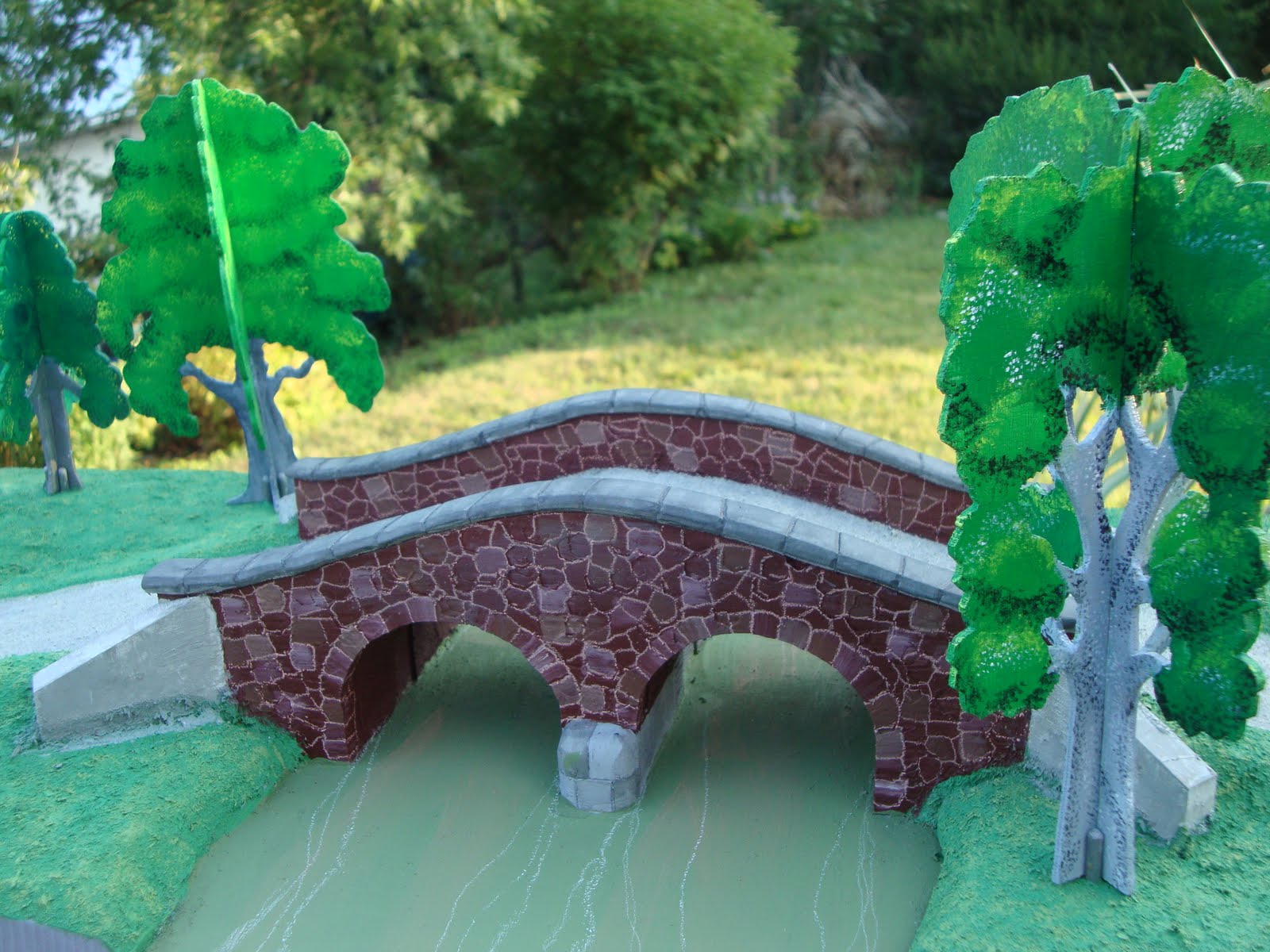
My friend Rory, who is 40, recently returned to the ancestral manse to clean out some boxes, an altogether unremarkable demonstration of filial piety - helping out the folks.
What became remarkable, however, was one particular, and vaguely-familiar cardboard carton he encountered on a high shelf in a closet. At just about the same time that he was processing the moment, he opened the carton and had the joyous experience of rediscovering an important part of his childhood...
Fort Revenge!


There it was, in all of it's plywood and masonite glory, a 54mm frontier-style fort, replete with cowboys, Indians, Britians ACW soldiers, horses and artillery, as well as a raft of plastic accessories. What a delightful treasure-trove! Rory had acquired this lot at a yard sale when he was a boy of eleven. Many happy summers were spent setting up and knocking down (with rubber bands) these figures in and around Fort Revenge.
Too often, Forts Revenge et al are forgotten, boxed up, sent away, and lost forever. The pathetically familiar sight of a middle-aged man scouring ebay, and leveraging the better part of a mortgage payment toward the chance of reclaiming a magic bit of his mistily happy childhood may be one that many of us are familiar with.
Not so Rory.
Here it was all boxed up and quietly waiting for him. It was a very happy forty-something that came back home and triumphantly shared his bounty with me for this blog.
Although the plywood and masonite fort contains no manufacturers marks it is clearly an item of mass-production. Slotted panels fit together to form walls and to provide supports for the interior walkways and blockhouses.

A gated palisade wall with four blockhouses and an interior headquarters structure make for a sturdy, roomy, well-protected fort.

Included in the cardboard box were enough soldiers and cowboys cast in blue...

as well as artillery...

to provide a formidable defense.
And now; our story.
To generalize, the American Civil War was divided into four theaters of operation, the East, the West, the Trans-Mississippi, and the Far West. Typically, the further west one went the greater the distances the armies moved and fought. And beyond the Western theater the engagements became smaller, nastier, and fought by smaller forces comprised of inferior soldiery led by bottom-of-the-barrel officers (remember, this is a generalization). This is the story of one of those forgotten engagements that characterized the Far West theater - The Battle of Fort Revenge.
Fort Revenge was a forgotten backwash of Arizona,
near modern Winslow.
 Fort Revenge was a typical palisade-wall outpost on the
Shamakalapoosa river, on the road to nowhere,

guarding the flank of the more modern Fort Snodgrass three miles upriver.
As the construction of the brick and stone Fort Snodgrass neared completion so too did the mission of Fort Revenge. Once the new fort was completed the garrison of Fort Revenge was to raze the old fort and transfer to the new.
The old fort, however, would have its day in the sun, just prior to any of that happening due to the mistaken belief, on the part of Confederates, that Fort Revenge was one of the few settlements in the region that was not afflicted with consumption (Tuberculosis as we know it today).
Rebels in the far-west, already operating under extreme hardship thought that the seizure and occupation of Fort Revenge by their forces would provide harried and haggard rebels with some small respite from the diseases ravaging their army.
 The ironic reality is that the Federal government was utilizing Fort Revenge as both a consumption isolation ward for stricken Union troops as well as an asylum for lunatic Federal officers. The quality of troops and leadership of the opposing sides were nearly equal, given that spirochetes had incinerated the nervous systems of the great majority of the belligerents, leaving maddened, stuperous, or oddly euphoric soldiers in their wake.
Revisionists of the 1970s have also made a strong case for Fort Revenge being utilized as a labratory in the nascent days of biological warfare; against the Indians.
It was a real bug-house.
Enter into this mix the Alpaca clan of the Shamakalapoosa Nation, a proud people, though reduced in numbers and influence, who found themselves the proxies of the Confederates, mere cannon fodder to do the bidding of the dregs of the rebel nation against the dregs of the Lincolnites.
The treatment of the Shamakalapoosa by their Confederate masters was informed by the slave-holding heritage of the men in butternut and gray. Cruel overseers, the rebels thought nothing of the expenditure of Indian lives, in fruitless assaults against fortified Federal positions. Using all the coercive powers in their considerable array of white-supremacist madness, the Confederates brought great exertions and energies to the subjugation and exploitation of the Shamakalapoosa. It may come as no surprise that the equally racist Federal defenders of Fort Revenge were indifferent to the near extermination of the Indians; a rare example of common cause between opposing sides.
As the completion of still un-garrisoned Fort Snodgrass loomed, time was growing short for the Rebels to mount their attack on Fort Revenge, their would-be sanatorium cum spa. On May third, as the roads became passable and the Rebel commander's fevered, syphilitic brain lapsed into a rare moment of clarity, the seized the opportunity to launch his attack, driving a spearhead of Shamakalapoosa into battle ahead of his handful of barely ambulatory rebel soldiers.
Union defenders, intoxicated on a home-brew cocktail of paint, molasses, grain alcohol, and hair tonic, might have missed the approach of the enemy had it not been for the one Amish man among them.

In an ironic instance of military mis-allocation of resources, the sole sober, literate, healthy, observant member of the garrison, hearing the approach of dozens of muffled plastic hooves...

roused his tentmates and alerted the garrison.

Soldiers and cowboys scrambled to the palisade walls, rifles and sixguns ready for action.

The Artillery detachment was able to muster just enough men from their opiated states to man a gun in the outer works.

Barely continent cavalry troopers squished into their saddles to make their drunken way forward to meet the equally soused rebel equine challenge.
Neither side presented the smartness of maneuver or alacrity to duty that typified the armies further east.

Observant to all of the fumblings, stumblings, and grumblings, of the opposing belligerents in blue and gray, the Shamakalapoosa waited with the stoicism, typical of their portrayal in Hollywood movies, knowing that within moments they would be forced, again, to do the deadly bidding of their secessionist masters.
With the dregs of Dixie cowering behind protection their Indian wards are again expected to do the heavy lifting in the assault.


In many instances the besotted sons of chivalry send forward their carmine-hued allies at gunpoint.

The game Shamakalapoosa surge forward toward the palisade walls and into the gaping maws of...

blue-belly artillery, both in the outer works...

as well as from the blockhouses.


Great losses befall the Indian attackers.
Despite great losses and long odds the Shamakalapoosa begin to make significant gains as one achieves a prime position...

atop a stagecoach abandoned just below the palisade.
As he plays his weapon upon the walls above...
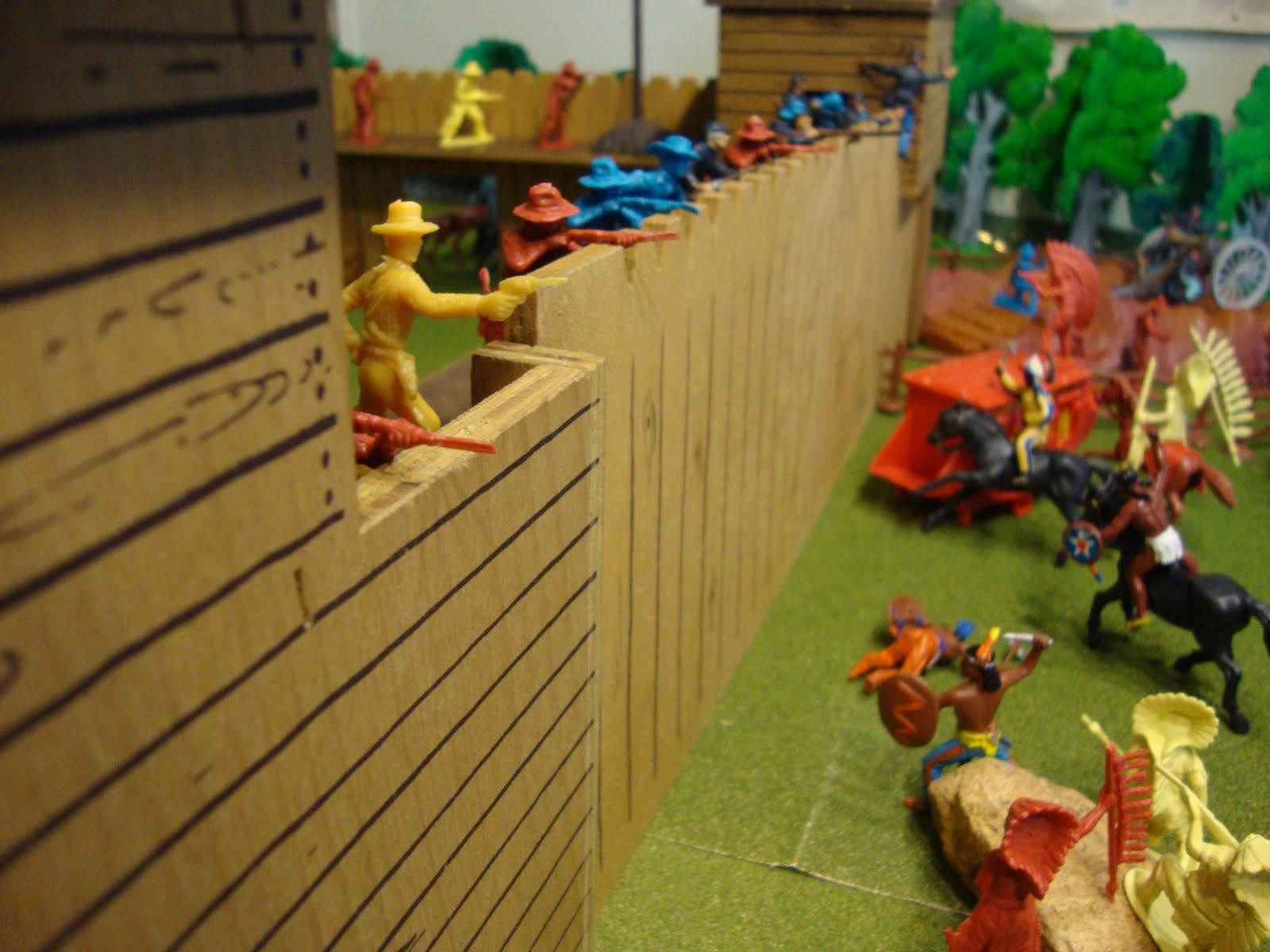
increasing numbers of his Shamakalapoosa brethren form a fearsome phalanx flowing forcefully toward the walls.

In their terrible numbers the Indians surge ahead...

spurred on by native bravery.
As the wall is gained, the Rebel troops now advance to exploit the gains made by their Indian wards. Scaling ladders are thrown against the heights and the few able-bodied among the rebel retinue make the arduous climb to the combat which awaits them above.

Gunsels in gray scramble upward to be met...

in disbelief by the diseased and dilapidated defenders.

Close combat convenes all along the wall...

some quarter asked, though none given.

Gasping graybacks grasp the gravity of the moment and gleefully gaze upon their goal.

Hapless defenders make a stand at their colors in a desperate defense of their diminishing domain.
Keen observers may note that in all of this murderous maelstrom swirling above the fort walls the Indians are suddenly quite absent. The canny men in red have stolen away to attend to a rare and unique opportunity that has been fated them.
Thus falls the final irony of the name "Fort Revenge". As the confused combatants struggle within the walls of the wooden fort, great, though unnoticed, activity stirrs within the brick and stone ramparts of Fort Snodgrass. Shamakalapoosa warriors, unfailingly observant of the ways of the white soldiers, have driven off the construction crew and have manned the large 15-inch Rodman gun.
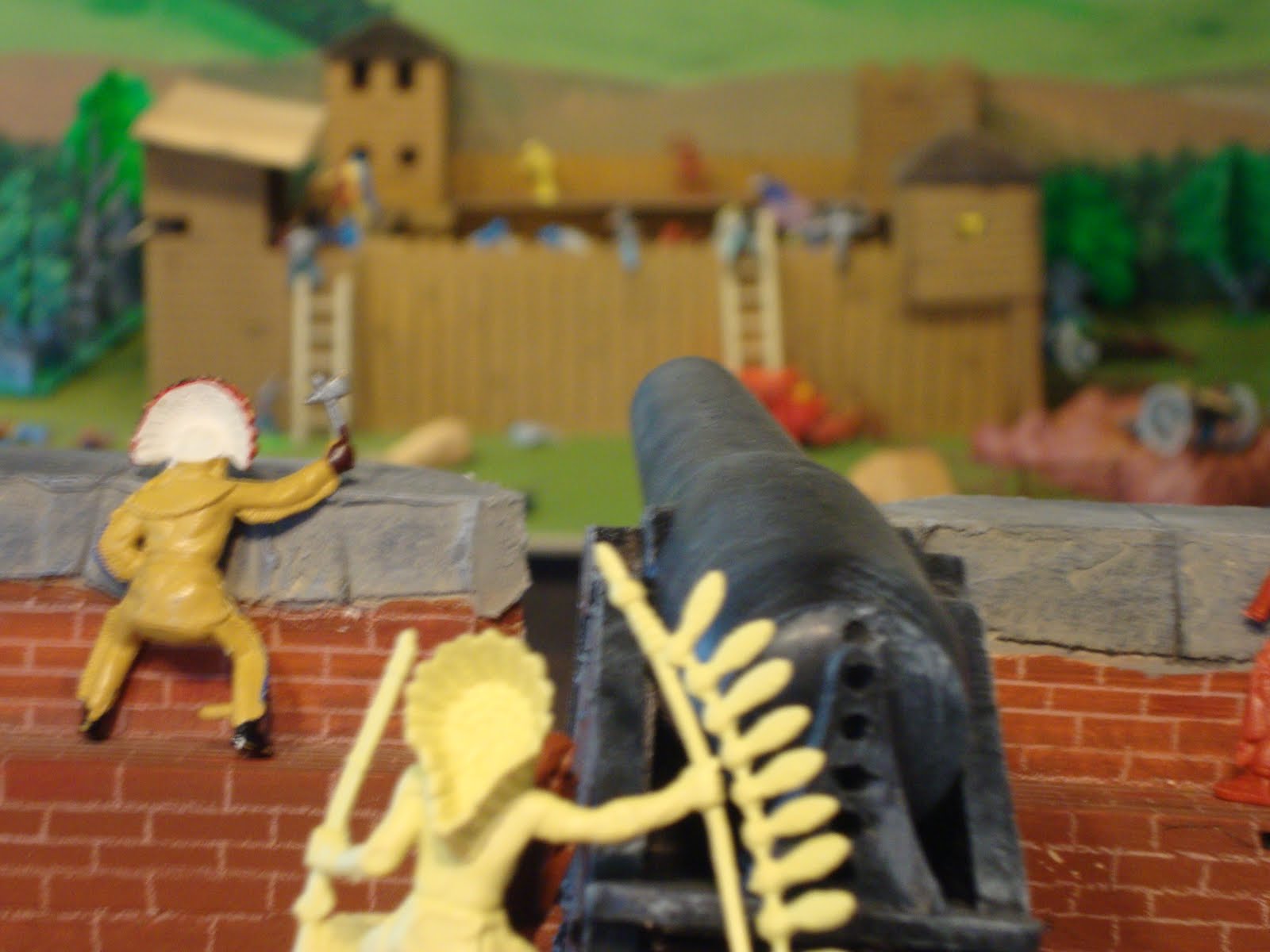
Taking careful aim, the always apt pupils of the ways of the white man have the gun loaded and in readiness.

the headman of the Shamakalapoosa raises his arm in a salute to the passing of the servitude of his people and a signal to his man tensing the firing lanyard
Fort "Revenge" indeed.
Visitors today can still encounter remains of the long-abandoned Fort Snodgrass, and the Park Service does maintain the ruins for visitation (by appointment).

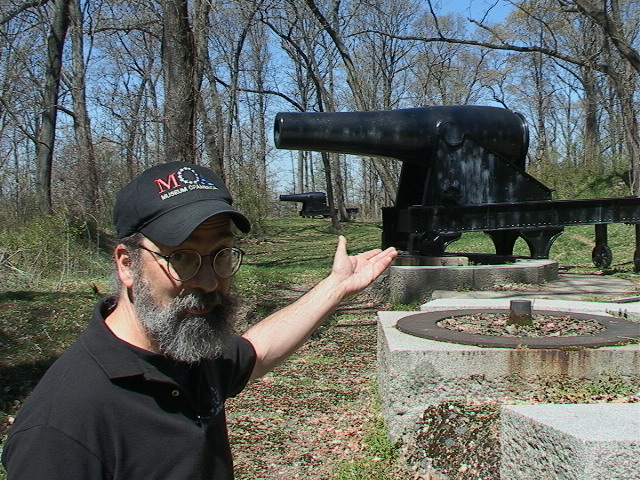
All that remains of Fort Revenge, however...

is a reminder of the marksmanship of the triumphant Shamakalapoosa.
Soldier on!
Mannie